 BestTurmericSupplement.com
Turmeric Supplements Explained: What the Research Shows Works, and What to Avoid
Turmeric has become one of the most popular supplements in the world, praised for supporting joint comfort, mobility, and a healthy inflammatory response. But popularity has a downside: the shelves are now crowded with underdosed, unverified, and outright misleading products. Before you spend a dollar, it pays to understand how turmeric really works, why most formulas fall short, and what separates a supplement that delivers real results from one that quietly wastes your money.
If you only remember three things
- Curcuminoid content is everything. Look for a 95% standardized extract, not raw “turmeric powder.”
- Absorption is non-negotiable. Without an enhancer like BioPerine black pepper extract, almost none of the curcumin reaches your bloodstream.
- Proof beats promises. Insist on a published Certificate of Analysis so you know what is actually in the bottle.
Everything below explains why, then shows you the five formulas that pass all three tests.
Short on time? Skip ahead to the part readers find most eye-opening:
Skip to The Milligram MythWhy buying turmeric is more confusing than it should be
You did the smart thing. You heard turmeric might help with joint comfort and a healthy inflammatory response, so you went looking for a good one. Then you hit a wall: hundreds of bottles, wildly different prices, and labels shouting numbers that seem to contradict each other. One says 1,500 mg. Another says 2,000 mg but costs half as much. A third promises “maximum strength” with no way to verify it.
Here is the uncomfortable truth: most of those numbers are close to meaningless on their own. The supplement industry is lightly regulated, and turmeric is one of the most commonly underdosed and mislabeled products on the shelf. Without knowing what actually matters, it is almost impossible to tell a genuinely effective formula from an expensive placebo, and the brands know it.
That is what this guide fixes. By the end, you will know exactly what to look for, what to avoid, and which products hold up under scrutiny.
What Harvard and the Arthritis Foundation say actually matters in a turmeric supplement
Turmeric and curcumin are not the same thing. Turmeric is the root. Curcuminoids are the active compounds inside it, and they make up only about 2–4% of raw turmeric powder. The rest is largely inert filler as far as your joints and inflammatory response are concerned.
This is the single insight that reframes the entire category: a bottle can legally advertise a big turmeric milligram number while delivering a tiny, ineffective dose of the compounds that actually do the work. The milligrams on the front of the bottle are not the point. The standardized curcuminoid content is.
A quality formula uses a standardized extract at 95% curcuminoids, which can be up to roughly 19× more potent than ordinary turmeric powder. Once you understand that, most of the marketing on the shelf falls apart in front of you.
The high-dose trap: root powder vs. 95% curcuminoid extract
Here is where most turmeric supplements quietly fail. To make a label look impressive, many brands load the capsule with cheap turmeric root powder and print a big milligram number on the front. But turmeric root powder is only about 2–4% curcuminoids, so even a large dose delivers only a tiny amount of the compounds that actually matter.
Big milligrams, tiny curcuminoids
A “2,000 mg turmeric” capsule made from root powder can contain less usable curcumin than a smaller dose of standardized 95% extract. The headline number is high, the potency is low.
More powder is not the answer
Because root powder is mostly non-curcuminoid plant matter, taking large amounts of it to “make up the difference” is not a good idea. You are swallowing a lot of filler, not more active compound. The smarter route is a concentrated, standardized extract.
Extract done right
A standardized 95% curcuminoid extract concentrates the active compounds, so a sensible ~1,000 mg serving delivers real potency. Pair it with black pepper extract for absorption and a published COA for proof, and you have a formula that actually works. Our #1 pick lets you view its actual lab report.
And here is the part the milligram-chasers miss: more is not automatically better. In fact, Harvard Health Publishing points to the Arthritis Foundation's guidance that a sensible curcumin extract dose is about 500 mg taken twice daily, roughly 1,000 mg per day, not the inflated four-figure numbers plastered across so many labels. [2]
“The maximum safe dosage for curcumin extract (the active component in turmeric) is one 500 mg capsule twice a day, a total of 1,000 mg per day.” — Harvard Health Publishing, citing Arthritis Foundation guidance
The takeaway: a well-formulated 1,000 mg standardized 95% curcuminoid serving with real absorption beats a “maximum strength” bottle of underdosed powder every time. Proper dosing and formulation matter far more than the biggest number on the front.
“What about oxalates?” The question few brands will answer
Turmeric root powder is naturally high in oxalates. Oxalates are compounds that can bind with calcium in the body and, in some individuals, contribute to kidney stone formation. This is especially relevant for adults over 45, anyone with a history of kidney stones, or those already eating a high-oxalate diet with foods like spinach, almonds, or beets.
The issue is that many turmeric supplements are made with basic whole-root turmeric powder. Published turmeric powder data has shown whole-root turmeric powder containing approximately 1.96% oxalate by weight. That means a 500 mg whole-root turmeric powder capsule could contain close to 9.8 mg of oxalate.
Me First Living takes a cleaner, more targeted approach. Instead of ordinary whole-root powder, we use a standardized turmeric root extract and verify it with lab testing. Our HPLC test showed only:
That is roughly 20x lower than a comparable 500 mg whole-root turmeric powder capsule based on the published benchmark, and more than 50x below the commonly referenced low-oxalate threshold of 25 mg per serving.
View our HPLC oxalate report ↗5 common turmeric mistakes almost everyone makes, once
Even careful shoppers get caught by these. Avoid them and you are already ahead of most buyers.
- Chasing the highest milligram number. Milligrams without standardized curcuminoids are a vanity metric.
- Assuming “maximum strength” means anything. It is a marketing phrase, not a regulated standard.
- Ignoring absorption. A high-potency extract with no black pepper enhancer still leaves most of its curcumin unabsorbed.
- Buying on price alone. The cheapest bottle is often the most expensive per effective dose.
- Trusting the front, not the facts. The Supplement Facts panel, standardization, and COA tell the real story, not the headline claim.
What to look for in a turmeric supplement
These are the five must-haves we used to score every product. Watch the checklist on the right fill in as you read: our #1 pick is the only one that satisfies all five.
Standardized extract, 95% curcuminoids
Whole root is only 2 to 5% curcuminoids. A standardized 95% extract concentrates the active compound so a serving delivers a real dose, not a trace. [2]
BioPerine at a measured 10mg
Piperine from black pepper supports curcumin absorption. Look for BioPerine listed with an actual milligram amount, around 10mg per serving. [1]
A robust 1000mg daily dose
1000mg of turmeric per serving is a substantial, well-tolerated daily dose, not the underdosed amounts common on cheaper labels.
Third-party tested, with a published COA
Do not guess. A current Certificate of Analysis confirms the label is accurate and screens for contaminants like heavy metals, which turmeric can pull from soil.
USA cGMP plus a real guarantee
Good Manufacturing Practice controls quality, and a genuine 100% happiness guarantee shows the brand stands behind the product.
When to expect what
At a truly absorbable dose, benefits build with consistent daily use. Here is the typical window.
Once curcumin is actually absorbing, everyday joint stiffness often begins to ease.
Mobility and post-activity recovery commonly improve as the effect compounds.
The full benefit window most turmeric studies measure. Reassess how you feel. [2]
Take one serving daily with a meal that has some fat. Consistency matters, and individual responses vary.
What people just like you experienced from our #1 pick
Me First Living Turmeric holds a 4.9-star average from 8,000+ verified reviews. Here is what real customers say after switching to a properly dosed, standardized 95% curcuminoid extract.
“I’ve been using Me First Living Turmeric for several years now and wouldn’t be without it. It really helps with my mobility.”
Judy F. Verified Buyer Customer for 3+ years“This turmeric is the best deal you will find. At 95% curcuminoids it is about as strong as you will find, and brands at that strength are much more expensive.”
Kirk R. Verified Buyer Customer for over 1 year“I have tried store turmeric with no effect. Me First turmeric is the real deal, you can tell it’s a much higher quality. Don’t waste your money on other brands.”
Steve O. Verified Buyer Customer for 3+ years“I’m a repeat customer of a couple years now. I had tried turmeric from 3–4 other companies that only contained around 100mg, and I wasn’t willing to take a handful of capsules to get an effective dose. I’ve recommended this brand several times to my friends.”
Susan C. Verified Buyer Customer for 5+ years“I took turmeric curcumin for about a year from other companies, then switched to Me First Living. It is a great product at a great price. Other companies charge way too much for the same ingredients, so I am staying with Me First Living.”
Tom T. Verified Buyer Customer for 4+ years“I have been ordering this turmeric for years and it is hands down the best I have ever come across!”
Jennifer G. Verified Buyer Customer for 9+ years“Like all supplements, you must take it daily and be persistent for it to be effective. Be patient, don’t be so quick to give up. I started with one capsule a day the first week, then changed to two capsules the second week, and that’s when I started to feel the difference. Give it a try!”
Robert L. Verified Buyer New customer · ~6 months“I feel really good since I started taking it. It has become part of my daily routine.”
Ellen K. Verified Buyer New customer · ~6 monthsOur top 5 turmeric supplements in 2026
Scores reflect absorption, potency, transparency, manufacturing quality, and guarantee. We accept no payment from brands to change the rankings.
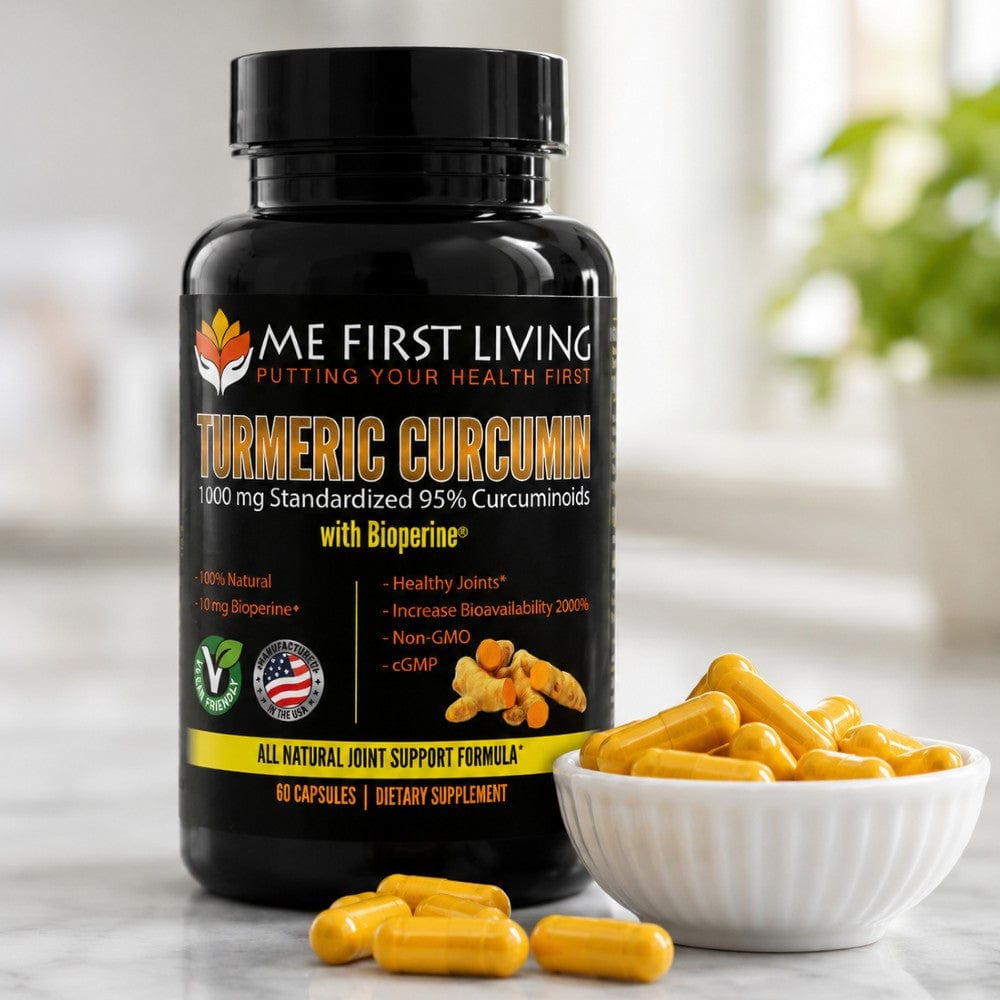
Me First Living Turmeric Curcumin + BioPerine®
95% Curcuminoids · 1000mg · 10mg BioPerine · 60 Capsules
Strengths
- Standardized 95% curcuminoid extract, 1000mg per serving.
- 10mg BioPerine black pepper for real curcumin absorption.
- Third-party lab tested with a Certificate of Analysis you can view.
- Ultra-low oxalate (0.49mg per capsule, HPLC-verified), a purity edge few brands disclose.
- Made in a USA cGMP facility. Non-GMO and vegan.
- Trusted by 200,000+ customers, 4.5 stars from 8,000+ verified reviews.
- Backed by a 100% happiness guarantee.
- Same/next-day delivery when buying from Amazon.
Limitations
- Only available online.
- High demand means it occasionally sells out.
The bottom line: Me First Living was the only formula in our audit to satisfy all five must-haves with public proof: a standardized 95% extract, a measured BioPerine dose, a published COA, USA cGMP manufacturing, and a genuine guarantee. If you want turmeric you can actually feel, start here.
No pricing shown here. You will see live offers on the retailer's site.
A respected extract with a strong reputation and included piperine. It loses ground on a piperine dose below the 10mg benchmark and the absence of a published Certificate of Analysis, so its potency claims cannot be independently confirmed the way our top pick's can. Check price on Amazon →
A solid, absorption-focused formula with a standardized extract and a real BioPerine dose. It asks for a three-capsule serving and does not publish a COA on its product page, which keeps it out of the top spot. Check price on Amazon →
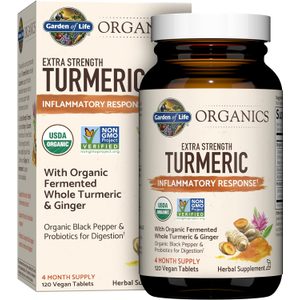
A clean, organic option from a trusted brand and a good fit for whole-food fans. It is not a 95% standardized extract and does not carry a measured black pepper dose, so the concentrated actives per serving fall short of our top picks. Check price on Amazon →
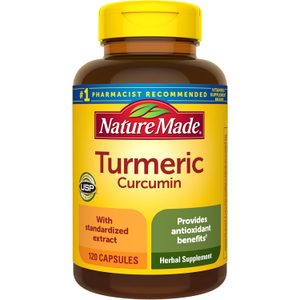
A trusted, budget-friendly drugstore name that is easy to find anywhere. Many of its SKUs are not standardized to 95% and skip black pepper entirely, so very little active compound actually absorbs. Check price on Amazon →
Frequently asked questions
Do I really need black pepper with turmeric?
Powder or extract, what is the difference?
What is a Certificate of Analysis (COA)?
How long before I should judge results?
Are there any side effects?
Can I buy the #1 pick in stores?
Little downside to trying it
The strongest picks on this list are backed by real guarantees. Our #1 pick, for example, is sold with a 100% happiness guarantee, if it is not right for you, you are covered.
Between third-party COAs, cGMP manufacturing, and a happiness guarantee, the downside of trying a properly made turmeric is about as low as it gets in this category.
The research we relied on
Our scoring framework prioritizes standardized curcuminoid content, piperine-supported absorption, verified third-party testing, and clear manufacturing disclosures. Below are representative references on curcumin and piperine.
- Shoba G, et al. Influence of piperine on the pharmacokinetics of curcumin in animals and human volunteers. Planta Med. 1998. PubMed
- Hewlings SJ, Kalman DS. Curcumin: A Review of Its Effects on Human Health. Foods. 2017. PubMed
- Daily JW, et al. Efficacy of turmeric extracts and curcumin for alleviating osteoarthritis symptoms. J Med Food. 2016. PubMed
- National Center for Complementary and Integrative Health. Turmeric. nccih.nih.gov
Me First Living Turmeric Curcumin + BioPerine®
The only formula in our audit that hits every must-have with public proof. A standardized 95% extract, 10mg BioPerine, a published COA, USA cGMP manufacturing, and a 100% happiness guarantee.