
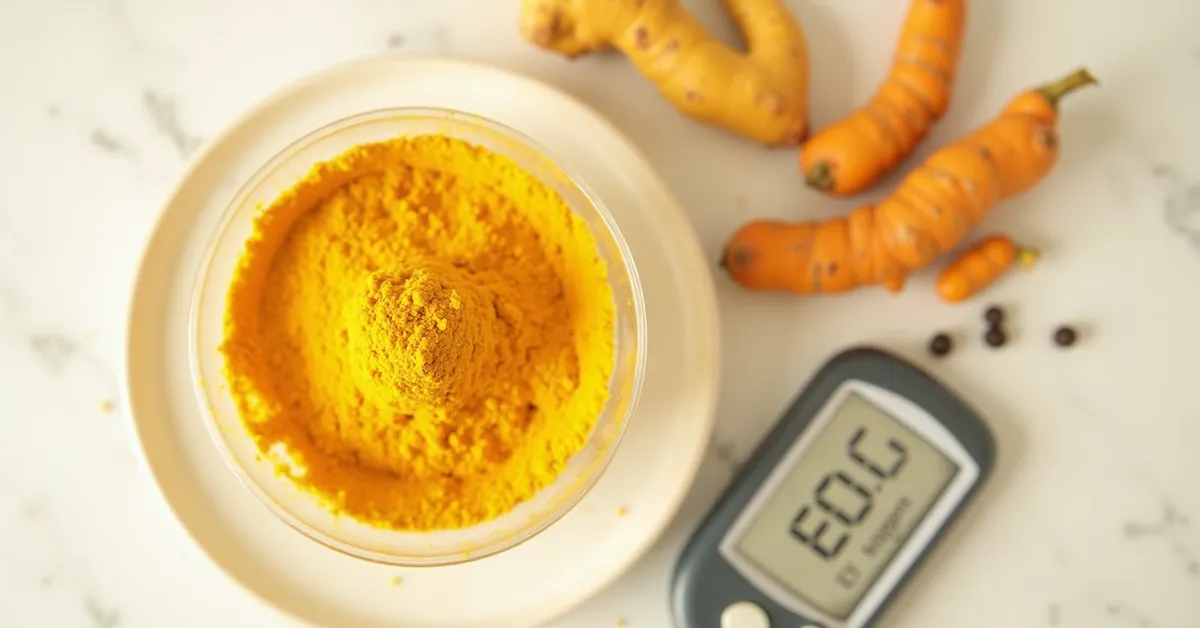
Blood sugar management is one of the most researched applications for turmeric’s active compound, curcumin. Over the past decade, a growing body of clinical evidence has examined how curcumin affects fasting glucose, insulin sensitivity, and HbA1c levels in people with prediabetes, type 2 diabetes, and metabolic syndrome. The results are consistently promising, though the picture is more nuanced than headlines typically suggest.
Disclosure: This post contains affiliate links. We may earn a commission if you purchase through our links, at no extra cost to you. We only recommend products we trust.
This article breaks down what the research actually shows, what dosages were used in the strongest studies, and how curcumin’s absorption affects whether those benefits translate from the lab to your supplement routine.
How Curcumin Affects Blood Sugar Regulation
Curcumin doesn’t work through a single pathway the way metformin does. It appears to influence blood sugar regulation at multiple points in the metabolic cascade.
First, curcumin activates AMPK (adenosine monophosphate-activated protein kinase), an enzyme that functions like a cellular fuel gauge. When AMPK is active, cells take up glucose more efficiently and reduce hepatic glucose production. This is one of the same pathways targeted by some diabetes medications.
Second, curcumin suppresses inflammatory signaling, particularly through NF-kB inhibition. Chronic low-grade inflammation is now recognized as a major driver of insulin resistance. Fat tissue in people with metabolic syndrome produces inflammatory cytokines like TNF-alpha and IL-6, which interfere with insulin receptor signaling. By reducing this inflammatory load, curcumin may help restore normal insulin sensitivity.
Third, several animal and in vitro studies have found that curcumin upregulates GLUT4 transporters, the proteins that shuttle glucose from the bloodstream into muscle and fat cells. When GLUT4 expression is higher, cells respond better to insulin signals.
What the Clinical Research Shows
The strongest evidence comes from systematic reviews aggregating data across dozens of randomized controlled trials.
A 2024 meta-analysis of meta-analyses published in a peer-reviewed nutrition journal pooled data from multiple prior systematic reviews and found that curcumin supplementation leads to a statistically significant decrease in fasting blood sugar levels (effect size: -1.63; 95% CI: -2.36 to -0.89, P less than 0.001), as well as reductions in HOMA-IR (a measure of insulin resistance) and fasting insulin (PMID: 39270815).
A separate 2023 GRADE-assessed systematic review and dose-response meta-analysis that included 43 randomized controlled trials found that turmeric and curcumin supplementation significantly reduced fasting blood sugar, fasting insulin, HbA1c, and HOMA-IR compared to placebo. The dose-response analysis suggested benefits emerged at doses of 500 mg to 1,500 mg of curcumin daily (PMID: 37748368).
These findings hold across multiple populations: people with prediabetes, those with established type 2 diabetes, and individuals with metabolic syndrome all showed measurable improvements in at least one glycemic marker.
The Bioavailability Problem (and Why It Matters for Blood Sugar)
Here’s where most turmeric users leave benefits on the table: raw curcumin is notoriously difficult to absorb. Studies consistently show that plain curcumin passes through the digestive tract largely unabsorbed, which means the active compound never reaches the tissues where it needs to work.
The solution is pairing curcumin with piperine, the active compound in black pepper. A landmark pharmacokinetics study found that co-administering 20 mg of piperine with curcumin increased curcumin’s bioavailability in humans by 2,000% compared to curcumin alone (PMID: 9619120). This explains why virtually all serious curcumin research uses enhanced bioavailability formulations, and why supplements that include BioPerine (a standardized piperine extract) produce meaningfully different results than basic turmeric powder.
This isn’t a minor detail when it comes to blood sugar effects. If curcumin isn’t absorbed, the AMPK activation and inflammatory pathway modulation described above simply don’t happen at meaningful levels in the body.
For more on why this matters, see how BioPerine improves curcumin absorption and what the full research on turmeric and blood sugar shows at the MFL health journal.
Dosage and Timing for Blood Sugar Support
The clinical trials showing glycemic benefits used curcumin in amounts ranging from 500 mg to 1,500 mg per day, typically standardized to 95% curcuminoids. Most studies divided the dose across two or three servings rather than taking it all at once.
Taking curcumin with a meal that contains fat improves absorption, since curcumin is fat-soluble. Morning and evening doses with breakfast and dinner is a practical split that many studies used. Protocols typically ran for 8 to 24 weeks before meaningful HbA1c changes were detectable, since that marker reflects a 2 to 3 month average of blood sugar levels.
Dosing specifics are covered in detail in our guide on how much turmeric to take per day and the science behind how turmeric reduces inflammation.
Curcumin as Part of a Metabolic Health Protocol
The research doesn’t position curcumin as a replacement for lifestyle interventions or medication. It’s better understood as a complementary tool that addresses mechanisms (inflammation, oxidative stress, insulin signaling) that standard approaches don’t always target directly.
People who saw the most consistent benefit in trials were those already following reasonable dietary patterns but dealing with metabolic dysfunction driven by chronic inflammation. Curcumin’s NF-kB inhibition appears to break a cycle where fat tissue inflammation worsens insulin resistance, which leads to more fat accumulation, which drives more inflammation.
If you’re managing blood sugar with prescription medications, check with your doctor before adding high-dose curcumin, since it may have additive effects on blood glucose lowering. This is a worthwhile conversation rather than a reason to avoid it entirely, since the interaction, if present, would more likely require a medication adjustment than cause harm.
Choosing a Supplement for Blood Sugar Benefits
Given that absorption is the limiting factor, the most important criterion when selecting a turmeric supplement for metabolic health is whether it includes a bioavailability enhancer. Formulations with BioPerine (standardized piperine) at 5-10 mg per serving cover this adequately for most people.
Standardization to 95% curcuminoids ensures you’re getting a meaningful dose of the active compound, not primarily filler starch from raw turmeric root.
Me First Living’s Turmeric Curcumin with Black Pepper delivers 1,000 mg curcuminoids per serving with BioPerine included, matching the dosage parameters used in clinical research. It’s available direct or on Amazon if that’s more convenient.
The Bottom Line
The evidence that curcumin supports healthy blood sugar levels is now grounded in dozens of clinical trials and multiple high-quality meta-analyses. It works through anti-inflammatory and insulin-sensitizing mechanisms that are distinct from standard treatments, making it a genuinely useful addition for people managing metabolic health.
The catch is absorption: without piperine or another bioavailability enhancer, most of the curcumin you take won’t reach your bloodstream in meaningful amounts. Choosing a well-formulated supplement closes this gap and is the single most important factor in whether you get clinical-trial-level results or not.
Expect meaningful glycemic improvements to emerge over 8 to 12 weeks of consistent use, particularly in fasting glucose and insulin sensitivity markers.