Turmeric with Black Pepper: Why It Matters
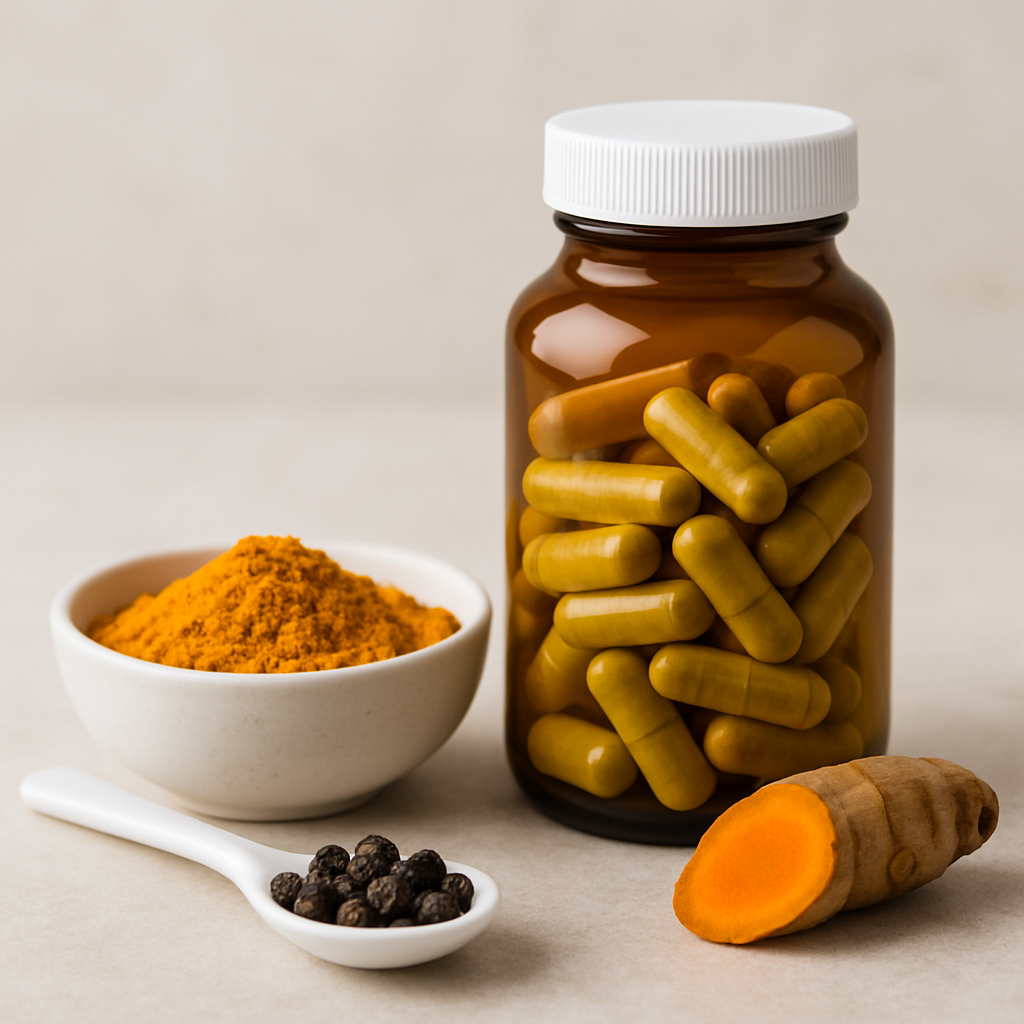
If your turmeric supplement doesn’t contain black pepper extract, you’re leaving most of the active compound in your toilet. That’s not a figure of speech. It’s what the pharmacokinetic data shows.
Here’s the science behind why black pepper transforms turmeric from a nice food spice into a supplement that actually works.
The Bioavailability Problem
Curcumin is the primary active compound in turmeric. It has well-documented anti-inflammatory, antioxidant, and neuroprotective properties. The problem is getting it from your digestive system into your bloodstream in meaningful quantities.
Curcumin is poorly absorbed through the intestinal wall. What does get absorbed gets rapidly metabolized in the intestinal mucosa and liver. It’s also water-insoluble, which means it doesn’t dissolve well in the GI tract. The result: a large percentage of oral curcumin passes through your system without ever reaching systemic circulation.
Early human studies using plain curcumin extract found very low plasma concentrations even after doses of 2,000-4,000mg. The therapeutic concentrations seen in cell studies were not being achieved in the blood. This was recognized as the central challenge in curcumin research throughout the 1990s and early 2000s.
The 1998 Planta Medica Study: 2,000% Is Not a Typo
In 1998, Shoba G. and colleagues at St. John’s Medical College in Bangalore published a landmark study in Planta Medica: “Influence of Piperine on the Pharmacokinetics of Curcumin in Animals and Human Volunteers.”
The study gave human subjects curcumin (2,000mg) alone, and the same dose of curcumin combined with 20mg of piperine. The researchers measured curcumin levels in blood at multiple time points after dosing.
The result: adding piperine increased curcumin’s maximum serum concentration (Cmax) by 2,000% and extended its time in the bloodstream significantly. The bioavailability increase was 2,000%, not 200%, not 20%. Two thousand.
This is one of the most replicated and cited findings in nutraceutical research. Multiple subsequent studies confirmed the basic finding across different doses and formulations.
How Piperine Actually Works
Piperine increases curcumin bioavailability through several mechanisms:
Intestinal Enzyme Inhibition
The main mechanism: piperine inhibits enzymes in the intestinal mucosal epithelium that would otherwise rapidly metabolize curcumin before it enters the portal circulation. Specifically, it inhibits UDP-glucuronosyltransferases and sulfotransferases, enzymes that conjugate (attach sugar or sulfate groups to) curcumin, making it inactive and water-soluble for excretion. By blocking these enzymes, more intact curcumin crosses the intestinal wall.
Slowed Intestinal Transit
Piperine slightly slows intestinal transit time, giving curcumin more contact time with the absorptive surface of the small intestine.
Thermogenic Effect
Piperine enhances the thermogenic activity of intestinal cells, which increases their absorptive capacity generally.
Liver Metabolism Inhibition
Piperine also inhibits hepatic (liver) metabolism of curcumin through CYP3A4 pathway inhibition, extending curcumin’s time in circulation once it has been absorbed.
BioPerine: The Standardized Version That Matters
Not all black pepper extract is the same. BioPerine is a patented extract from Sabinsa Corporation, standardized to 95% piperine. It’s the form used in the original 1998 Planta Medica study and in most of the subsequent clinical research.
The standardization matters. Generic “black pepper extract” might be 20% piperine or 40% piperine or might vary batch to batch. BioPerine gives you a known, consistent piperine concentration that you can rely on for dosing.
How Much BioPerine Is Enough?
The original study used 20mg of piperine with 2,000mg of curcumin. Subsequent research refined this: 5mg of BioPerine per dose is sufficient to achieve dramatic absorption improvement at typical supplement doses of 500-1,000mg curcumin.
Look for 5mg of BioPerine per serving on the label. More than 5mg doesn’t appear to provide additional absorption benefit. Less might reduce the effect.
Why Some Products Skip BioPerine
BioPerine is a patented ingredient. Using it requires a licensing agreement with Sabinsa and costs more than using generic black pepper powder. Some manufacturers use unlicensed piperine extract (listed as “black pepper fruit extract” or “piperine”) which may be cheaper but has less standardization consistency.
Others skip piperine entirely and list it nowhere on the label. These products are saving money at the cost of your absorption.
At typical supplement retail prices, the cost of 5mg BioPerine per capsule is fractions of a cent. Brands that skip it are cutting costs in the one area that determines whether the rest of the formula does anything.
Me First Living Has BioPerine at the Right Dose
Me First Living’s Turmeric Curcumin 1000mg includes 5mg of BioPerine per serving alongside 1,000mg of turmeric extract standardized to 95% curcuminoids. That’s the full absorption stack: therapeutic dose of curcuminoids plus the proven piperine amount needed to get them into your system.
It’s not complicated. But a surprising number of products on the market either skip BioPerine entirely or use underdosed generic piperine. Always check the label.
Does This Mean All Black Pepper Is Good for Absorption?
Eating turmeric with black pepper in food does provide some piperine, which helps. Traditional South Asian cooking often combines turmeric with black pepper in curries, and it’s plausible that traditional culinary wisdom discovered this pairing empirically over centuries.
But standardized supplementation gives you much more precise dosing. A pinch of black pepper on your curry adds maybe 5-10mg of total piperine, which is actually in the right range. The difference: with a supplement, you know exactly how much piperine and curcumin you’re getting, and the curcumin is standardized to 95% rather than the 2-5% in turmeric powder.
The Bottom Line
Black pepper extract isn’t a minor add-on ingredient. It’s what transforms curcumin from a poorly absorbed compound into one that actually reaches your bloodstream in therapeutic amounts. The 2,000% absorption increase from the 1998 Planta Medica study is real, replicated, and mechanistically explained.
Five milligrams of BioPerine per serving is the threshold that matters. If your supplement has it, great. If it doesn’t, you’re likely absorbing a fraction of what the label says you’re getting.
For more context on how absorption affects the results you see from turmeric: how long does turmeric take to work and turmeric vs curcumin: what’s the difference.