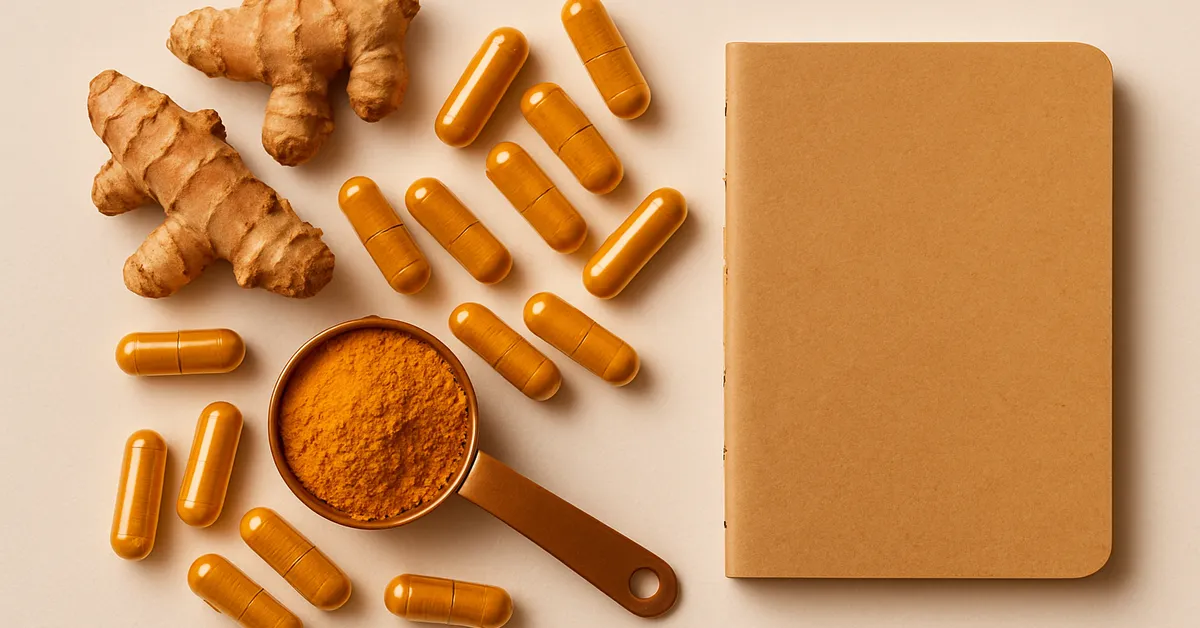
Understanding the right dosage of turmeric and curcumin is crucial for effectively managing inflammation. While many people use these terms interchangeably, they are not the same, and this confusion can lead to significant dosing errors.
Turmeric vs Curcumin: The Dosing Confusion Starts Here
Turmeric contains several active compounds known as curcuminoids, with curcumin being the most studied. Curcumin comprises about 2-5% of raw turmeric by weight. Therefore, if you consume a teaspoon of turmeric powder, you are getting approximately 30-60mg of actual curcumin, which is not a therapeutic dose for inflammation.
Turmeric supplements that are standardized to 95% curcuminoids are concentrated extracts. A 500mg capsule of this standardized extract contains about 475mg of curcuminoids, which is significantly different from a 500mg capsule of plain turmeric powder. When clinical studies provide dosing recommendations for curcumin supplementation, they refer to this standardized extract, not raw turmeric powder. This distinction is the most critical aspect to understand before proceeding.
What Doses Were Actually Used in Inflammation Studies
Clinical researchers determine specific doses through testing and measuring outcomes. The following doses have been shown to be effective in human trials:
- 500mg curcuminoids twice daily (1,000mg total): The most commonly used dose in positive randomized controlled trials (RCTs), particularly for osteoarthritis, metabolic inflammation, and general inflammatory marker studies.
- 1,500mg daily: Used in several trials for more severe inflammatory conditions and still well-tolerated.
- 3,000-8,000mg daily: Used in some high-dose trials with phospholipid or nano-formulations to enhance absorption. This is rarely necessary with a properly formulated supplement containing BioPerine.
A 2021 meta-analysis examining curcumin across randomized controlled trials found that therapeutic effects were consistently achieved in the 500-1,500mg standardized curcuminoid range when absorption enhancers were used. Going beyond 1,500mg per day with a BioPerine-enhanced formula does not appear to provide additional benefits. A key review in Biomolecules confirmed that curcumin's anti-inflammatory effects target multiple pathways simultaneously, including NF-kB, COX-2, and cytokine production, which is why even moderate doses yield measurable effects across different inflammatory markers.
Why 95% Curcuminoids Standardization Matters
In supplement stores, you will find a variety of turmeric products with differing labels. Some indicate 500mg turmeric root, while others specify 500mg curcumin extract standardized to 95% curcuminoids. These are not equivalent products. Standardization to 95% curcuminoids means the manufacturer has concentrated and tested the extract to ensure that 95% of the capsule content consists of active curcuminoid compounds. This provides predictable and consistent dosing.
Without standardization, you are essentially guessing. Batch-to-batch variation in non-standardized turmeric products can be significant. When aiming for a therapeutic dose for inflammation, consistency is crucial. You cannot calibrate a protocol if you are unsure of the amount of active compound you are actually consuming. Look for these markers on the label:
- Standardized to 95% curcuminoids or 95% curcumin extract
- BioPerine or piperine listed as an ingredient
- Third-party testing or Certificate of Analysis (COA) available
- The actual amount of curcuminoids per serving, not just total turmeric
The BioPerine Factor: Why Absorption Changes Everything
You could be taking a perfectly dosed, 95%-standardized curcumin supplement and still absorb very little of it. Curcumin is fat-soluble and is rapidly metabolized by the liver through glucuronidation, meaning most of it never reaches systemic circulation at therapeutic concentrations. BioPerine (patented piperine from black pepper) significantly alters this equation. Piperine inhibits the glucuronidation enzymes that break down curcumin and slows intestinal transit, allowing your gut more time to absorb it.
The landmark study on this combination demonstrated that 20mg of piperine increased curcumin bioavailability by 2,000% in healthy volunteers. Practically, this means a 500mg curcumin dose with BioPerine delivers blood levels roughly equivalent to 10,000mg of plain curcumin. This is why clinical studies that showed benefits used BioPerine-containing formulations, while many studies with plain curcumin exhibited weaker results.
Acute vs Chronic Inflammation: Different Protocols
Not all inflammation is the same, and your dosing strategy should reflect that.
Acute Inflammation
This refers to short-term inflammation, such as post-workout soreness, minor injury flare-ups, or illness-related inflammation. Curcumin can help in these situations, but it should not be expected to replace NSAIDs for fast acute relief. What it can do includes:
- Reduce post-exercise muscle soreness when taken consistently around training
- Support recovery from minor inflammatory events
- Potentially shorten the duration of inflammation cycles
For acute situations, some individuals temporarily increase their intake to 1,500-2,000mg daily for 5-7 days, then return to maintenance dosing. This is safe with standardized extracts, although evidence for short-burst dosing is less robust than for chronic use.
Chronic Inflammation
This is where curcumin is particularly effective. Chronic low-grade inflammation contributes to pain and tissue breakdown in conditions such as osteoarthritis, inflammatory bowel issues, metabolic syndrome, and general joint deterioration from athletic use. Research on turmeric for pain relief suggests that curcumin may help alleviate inflammation-related discomfort. For chronic inflammation management:
- 500-1,000mg curcuminoids daily as a baseline
- Evaluate at 8-12 weeks, not before
- Continue indefinitely if effective, as the benefits appear to be maintenance-dependent
Timing: When to Take Turmeric for Best Results
Curcumin's fat solubility is a key variable in absorption. Taking it with food that contains fat significantly enhances absorption. It is advisable to avoid taking it on an empty stomach. Here are the best timing options:
- With breakfast: A good option, as most breakfast foods contain some fat (e.g., eggs, nuts, whole grains with olive oil). You start your anti-inflammatory dose early.
- With lunch and dinner (split dose): The ideal approach for most people. Splitting 1,000mg into two 500mg doses maintains more consistent blood levels throughout the day.
- Pre-workout: Some athletes take it 30-60 minutes before training to mitigate exercise-induced inflammation, and some research supports this approach.
- Post-workout with a protein meal: Also a good window, especially if your protein shake or meal contains some fat.
What to avoid:
- Taking curcumin with only water on an empty stomach, as absorption will be minimal.
- Inconsistent dosing by skipping days. Consistent daily use builds a sustained effect; sporadic dosing does not.
- Washing it down with coffee or highly acidic beverages immediately before meals. While not disastrous, it is suboptimal.
What Happens If You Take Too Much
Curcumin has an excellent safety profile. Studies have used doses as high as 8,000-12,000mg daily without serious adverse events. At typical supplement doses (500-2,000mg daily), side effects are rare and mild when they do occur. The most common complaints at higher doses include:
- GI discomfort (nausea, loose stools) at very high doses
- Yellow staining of skin or teeth with very high long-term use (more common with powders than capsules)
- Potential interaction with blood-thinning medications at high doses
If you are on blood thinners (warfarin, aspirin therapy), consult your doctor before taking curcumin. Curcumin has mild anti-platelet properties that can compound the effect of these medications. At the doses used in clinical research (500-1,500mg standardized extract daily), essentially no one experiences problems. The instinct that more is better does not apply here; it is best to stay within the research-validated range.
Putting It Together: A Practical Dosing Protocol
Here is a simple starting protocol based on the evidence:
- Product: 95% standardized curcuminoids with BioPerine (at least 5-10mg piperine per dose)
- Daily dose: 500mg with breakfast, 500mg with dinner (1,000mg total)
- With fat: Always take with a meal that contains some dietary fat
- Timeline: Commit to 8-12 weeks before evaluating
- Heavy training periods: Increase to 500mg three times daily if needed
The research is clear: the difference between turmeric not working and delivering real anti-inflammatory effects hinges on product quality, standardization, and consistent use. Get those three elements right, and you are giving the science a fair shot.