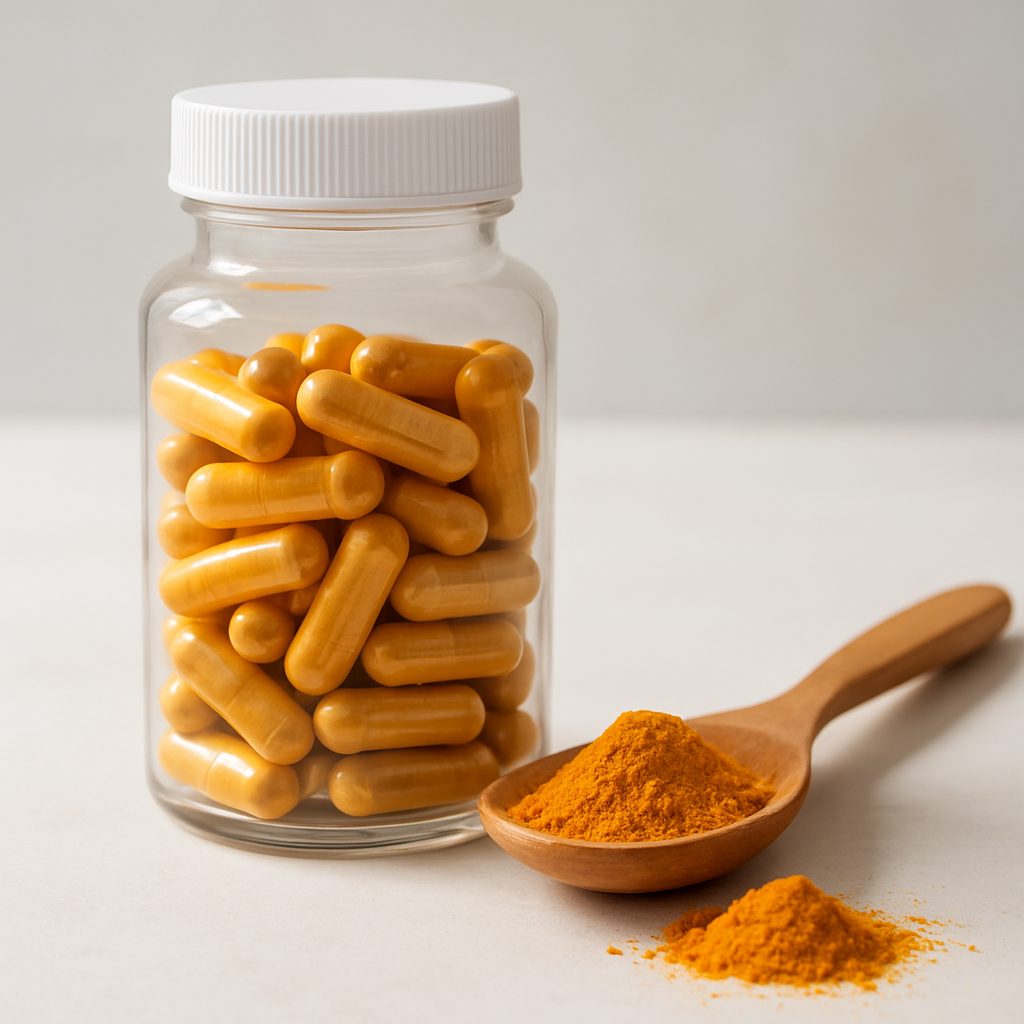
Everyone's heard that turmeric is good for you. But how much should you actually take? The answer isn't as simple as a teaspoon a day. Getting the dosage right is the difference between results and wasted money.
The Problem with Raw Turmeric Dosing
If you're sprinkling turmeric powder on your food, you're getting maybe 2-5% curcumin by weight. That means a full teaspoon (about 3,000mg of powder) gives you roughly 60-150mg of curcumin. Most clinical studies showing real benefits used 500-1500mg of curcumin, the active compound. You'd need to eat multiple tablespoons of raw turmeric powder daily to hit therapeutic levels, and your gut would not be happy about that. This is why standardized supplements exist. A quality supplement specifies its curcuminoid content, not just the raw turmeric weight.
Turmeric Dosage Per Day: The Numbers That Actually Matter
500mg: Entry Level
Some people see modest results at 500mg of curcuminoids per day. This dose shows up in studies looking at antioxidant markers and mild inflammation. If you're sensitive to supplements or just starting out, this is a reasonable beginning point. But for most people dealing with joint pain, chronic inflammation, or serious health goals, 500mg is probably not enough. If joint pain is your primary concern, this overview of turmeric for joint pain covers the research in detail.
1000mg: The Sweet Spot
1,000mg of standardized curcuminoids per day is where the research gets interesting. A 2012 study in Phytotherapy Research showed that 1,000mg of curcumin daily outperformed 100mg of diclofenac sodium (a prescription anti-inflammatory) in patients with knee osteoarthritis. That's a real number from a real trial, not a supplement company's marketing copy. Most well-formulated supplements, including Me First Living's Turmeric Curcumin 1000mg, are built around this dose. Two capsules get you to 1,000mg of turmeric extract standardized to 95% curcuminoids. That's 950mg of actual curcuminoids, which lines up with what works in the clinical literature.
2000mg: High-End Dosing
Some protocols push to 2,000mg per day, and a few studies have used doses up to 8,000mg. The 2006 paper in Arthritis and Rheumatism used higher doses to study NF-kB pathway inhibition. At 2,000mg, you're likely to see more pronounced effects, but you're also more likely to hit GI side effects, especially without food. The World Health Organization sets an acceptable daily intake of 0-3mg per kilogram of body weight for curcumin, which works out to around 210mg for a 70kg (154lb) person at the low end. Most therapeutic studies exceed this without significant adverse effects, but the WHO number reflects a conservative safety baseline, not a therapeutic target.
Why Standardized Curcuminoids Matter More Than Raw Turmeric Amount
This cannot be overstated. A supplement label might say 1500mg Turmeric Root in big letters. That sounds like a lot. But if it's just ground turmeric root with no standardization, you're getting maybe 30-75mg of curcuminoids. A supplement that says 500mg Turmeric Extract (standardized to 95% curcuminoids) is delivering 475mg of actual curcuminoids. That's 6-15x more active compound than the 1500mg product. Always look for the standardization percentage on the label. 95% curcuminoids is the benchmark. If it's not listed, assume the product is under-delivering.
Why BioPerine Is Critical
Curcumin has a serious bioavailability problem. Your body absorbs it poorly, and what little gets absorbed gets metabolized fast. A 1998 study in Planta Medica found that combining curcumin with piperine (the active compound in black pepper) increased curcumin absorption by 2,000%. Not 20%. Not 200%. Two thousand percent. BioPerine is the patented, standardized form of piperine. You need about 5mg of BioPerine per dose to get that absorption benefit. Products that skip BioPerine (often to save cost) are leaving most of the curcumin unabsorbed. When you're shopping, this is non-negotiable. Check for BioPerine or piperine in the ingredients. No black pepper extract, no real results.
Timing: When to Take Turmeric
Take It with Meals
Curcumin is fat-soluble, which means it absorbs better when you eat it alongside dietary fat. Take your supplement with your biggest meal of the day. Breakfast with eggs, lunch with avocado, dinner with any protein and fat, all work well. Taking it on an empty stomach increases the chance of nausea and reduces absorption.
Split the Dose
If you're taking 1,000mg per day, splitting into two 500mg doses (morning and evening, both with meals) keeps curcumin levels more stable throughout the day. A 2018 UCLA study that showed memory improvement used 90mg twice daily, which points to the consistency principle: steady exposure beats one big spike.
Consistency Over Time
Curcumin isn't like ibuprofen. It doesn't hit fast. Most people see meaningful changes at the 4-8 week mark. Daily consistency at the right dose matters more than occasional large doses.
What Happens If You Take Too Much
Curcumin is remarkably safe at normal doses. But push past 2,000-4,000mg per day and you're likely to encounter:
- GI upset: Nausea, diarrhea, and stomach cramping are the most common complaints at high doses.
- Blood thinning effects: Curcumin has mild anticoagulant properties. This matters if you're on warfarin, aspirin, or other blood thinners. High doses amplify this effect.
- Iron absorption interference: Very high doses may reduce iron absorption. If you're anemic or have low ferritin, this is worth watching.
- Gallbladder stimulation: Curcumin stimulates bile production, which is good for most people but problematic if you have gallstones or a bile duct obstruction.
Most people taking 1,000mg per day with BioPerine and food experience no side effects. The problems show up at doses far above what any quality supplement recommends.
Practical Summary: What to Actually Do
Start at 1,000mg of standardized curcuminoids (95%) per day, split into two doses with meals. Make sure your supplement includes 5mg of BioPerine or equivalent black pepper extract. Give it 6-8 weeks before judging the results. If you want to skip the research and just use something that checks all these boxes, Me First Living Turmeric Curcumin 1000mg delivers 1,000mg of turmeric extract at 95% curcuminoids with 5mg BioPerine per serving. That's the full stack, no guessing required. The goal isn't to take the most turmeric. The goal is to take the right amount that your body can actually use.