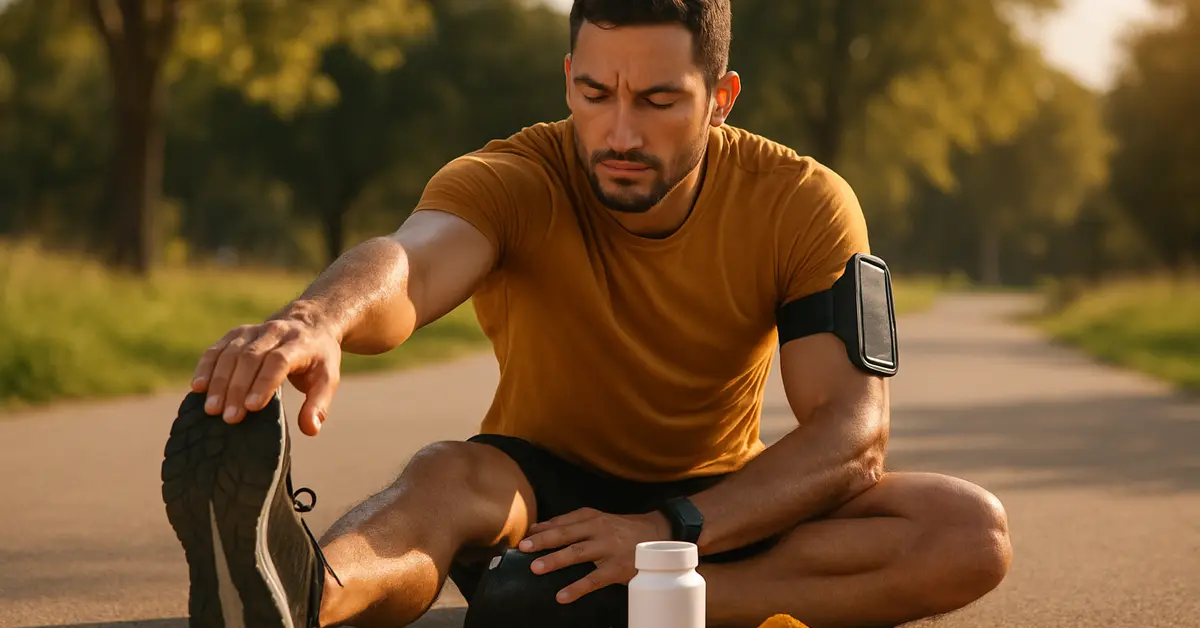
If you've ever woken up two days after a tough workout barely able to walk down stairs, you've experienced delayed onset muscle soreness firsthand. It's that deep, achy tightness that peaks around 24 to 72 hours post-exercise, and while it's completely normal, it gets a lot harder to shake as you get older. For active adults in their 40s and beyond, the question isn't just how to train harder, it's how to recover smarter. That's where turmeric, specifically its active compound curcumin, has been getting serious research attention.
Understanding Muscle Recovery and Inflammation
When you push your muscles hard, you create microscopic tears in the muscle fibers. The body responds by flooding the area with cytokines, which are signaling proteins that kick off the repair process. Key players include interleukin-6 (IL-6) and tumor necrosis factor-alpha (TNF-alpha), both of which trigger inflammation as part of the healing cascade. This is how muscles grow stronger. The repair process rebuilds the damaged tissue slightly thicker and more resilient than before. Inflammation here is productive.
The problem comes when that inflammatory response either runs too hot or lingers too long, turning what should be a 48-hour recovery window into a week of sluggishness and soreness. For younger athletes, this cycle is faster. For anyone past 40, the recovery machinery slows down. Inflammatory markers tend to stay elevated longer, and the body's natural antioxidant defenses, particularly something called nuclear factor erythroid 2 (Nrf2), become less efficient. That's the physiological reality that makes recovery supplements worth paying attention to.
Why Recovery Gets Harder With Age
The term for this is inflammaging, and it's exactly what it sounds like: the gradual rise in baseline inflammation that accompanies getting older. Even without exercise, older adults tend to carry higher resting levels of inflammatory markers. Add a tough workout on top of that already-elevated baseline, and the recovery curve gets steeper. Satellite cells, which are the muscle stem cells responsible for repair, also become less responsive with age. The result: more soreness, slower strength return, and a longer window where you're vulnerable to re-injury if you try to train through the pain. This is why weekend warriors and recreational athletes in their 40s and 50s often feel like they're working just as hard as they did at 30 but getting half the results. Training smart matters, but so does supporting the recovery side of the equation.
What the Research Says About Curcumin and Exercise Recovery
Curcumin works through multiple pathways that directly overlap with post-exercise inflammation. It inhibits NF-kB, a master regulator of inflammatory gene expression, and suppresses COX-2 enzymes, which are the same enzymes targeted by ibuprofen. It also acts as a direct antioxidant, neutralizing reactive oxygen species (free radicals) generated during intense exercise.
Several clinical trials have specifically tested curcumin in the context of exercise. A 2015 study published in European Journal of Applied Physiology found that participants who supplemented with curcumin experienced significantly reduced muscle soreness and lower markers of muscle damage compared to placebo. A later meta-analysis of multiple trials confirmed that curcumin supplementation was associated with meaningful reductions in both DOMS severity and creatine kinase levels, a blood marker of muscle damage, according to research published in Journal of the International Society of Sports Nutrition. Equally important, curcumin doesn't appear to blunt the adaptation response the way some anti-inflammatory drugs might. There's ongoing debate in sports science about whether suppressing inflammation too aggressively interferes with training gains. Current evidence suggests curcumin modulates inflammation rather than shutting it off, which may make it better suited for recovery support than NSAIDs for regular training use.
Timing Your Turmeric Intake Around Workouts
If you're going to use turmeric for recovery, timing and delivery matter. Most researchers have used doses in the range of 1,000 to 1,500 mg of curcuminoids per day in exercise studies. Taking turmeric once daily is fine for general use, but splitting the dose, taking some before your workout and some after, may help address both the acute inflammatory surge and the ongoing repair process. The pre-workout dose can help prepare the system before the inflammatory cascade begins. The post-workout dose supports the early repair phase when cytokine levels are peaking. Some protocols use 500 mg before and 500 mg within two hours after training.
One thing that's non-negotiable: turmeric needs fat to absorb properly. Curcumin is fat-soluble, meaning it passes through your gut poorly on its own. Taking your turmeric with a meal that contains some healthy fat, such as avocado, olive oil, or nuts, dramatically increases absorption. Without it, most of what you take passes through without being used.
The Absorption Problem (and Why It Matters More Than Dose)
Standard turmeric powder has notoriously low bioavailability. Studies have shown that plain curcumin can have absorption rates so poor that even large doses produce minimal blood levels. This is why the form of turmeric you take matters as much as the amount. Two things to look for: a high curcuminoid concentration (standardized to 95% curcuminoids rather than just turmeric root) and BioPerine, which is a patented black pepper extract. If you want to understand why black pepper is so critical, read more about turmeric and black pepper benefits. Piperine, the active compound in black pepper, has been shown in research to increase curcumin bioavailability by up to 2,000 percent by slowing its metabolism in the gut and liver. That's not a small difference. It's the difference between a supplement that actually reaches your tissues and one that you're essentially paying to urinate out.
Making It Part of Your Recovery Routine
Turmeric isn't a replacement for sleep, proper nutrition, or smart programming. Those fundamentals still do the heavy lifting. But as a complement to a solid recovery protocol, curcumin has a legitimate evidence base that most other recovery supplements can't match. For active adults who train regularly and find that soreness is starting to limit how often or how hard they can go — including runners and athletes dealing with joint pain — it's worth a consistent trial. Give it four to six weeks at a meaningful dose with proper timing. You're not looking for a dramatic overnight change. You're looking for whether your two-day soreness becomes one-day soreness, or whether you can get back under the bar a little fresher than before. That kind of marginal improvement in recovery compounds over months and years. And for anyone who wants to keep training hard well into their 50s and beyond, the compound interest on better recovery adds up to a lot.