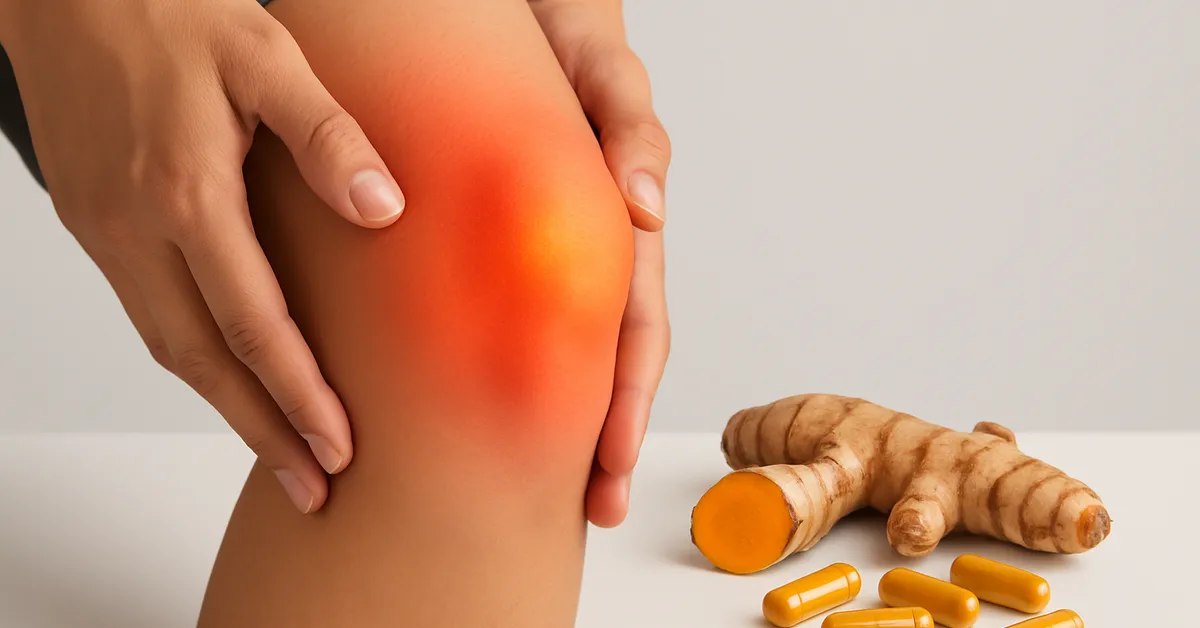
Turmeric, particularly its active compound curcumin, has garnered attention for its potential benefits in managing knee pain, especially among runners and athletes. Understanding how it works at a cellular level and the clinical evidence supporting its use can help you make informed decisions about incorporating it into your routine.
Why Runners and Athletes Destroy Their Knees (And What's Actually Happening Inside)
Your knee joint is remarkable engineering. It absorbs force equal to roughly three to five times your body weight with every running stride. For a 170-pound runner hitting 1,500 strides per mile, that's a staggering amount of cumulative load. Over time, the cartilage that cushions your knee wears down, inflammatory signals ramp up, and you end up with that familiar ache that makes stairs feel like a punishment. It can't heal itself the way muscle does. Once it thins out, the inflammation becomes chronic: your body keeps sending immune signals to fix the damage, but those same signals break down more tissue. It's a cycle, and once you're in it, it's hard to escape. That's where turmeric comes in. Not as a miracle cure, but as a genuinely useful tool that works on the underlying biology of that inflammation cycle.
What Turmeric Actually Does at the Cellular Level
Turmeric's active compound is curcumin. When researchers talk about turmeric for knee pain, they're really talking about curcumin and its effect on two key inflammatory pathways:
- NF-kB (nuclear factor kappa-light-chain-enhancer of activated B cells): This is essentially the master switch for inflammation in your body. When NF-kB gets activated, it triggers production of pro-inflammatory cytokines like IL-1beta, IL-6, and TNF-alpha. These are the molecules that make your knee swell, heat up, and hurt. Curcumin blocks NF-kB activation.
- COX-2: This enzyme is responsible for producing prostaglandins, which are the chemical messengers that cause pain and inflammation. Curcumin inhibits COX-2 as well, through a different mechanism than NSAIDs but with a similar downstream effect.
Research published in Food and Chemical Toxicology confirmed curcumin's role as a modulator of these inflammatory signaling pathways, showing it works on multiple points in the cascade simultaneously. That multi-target approach is actually an advantage over single-target drugs.
What the Human Studies Actually Show
Lab mechanisms are interesting, but what really matters is whether this works in actual people with actual knee pain. The clinical evidence here is solid enough to take seriously. A 2021 randomized, double-blind, placebo-controlled trial enrolled 101 adults with knee osteoarthritis. Participants received either 500mg of standardized curcumin twice daily or placebo for 12 weeks. The curcumin group showed significant reductions in pain and stiffness compared to placebo. This was a clean, well-designed trial, not a small pilot.
A comprehensive systematic review and meta-analysis published in 2021 examined all available randomized controlled trials on curcuminoids in knee osteoarthritis. The analysis concluded that curcumin supplementation significantly reduced pain and improved function, with an effect size that was clinically meaningful, not just statistically significant. The most recent umbrella meta-analysis, which synthesized multiple meta-analyses on the topic, was published in 2024. That analysis of the totality of evidence confirmed curcumin's efficacy for knee osteoarthritis outcomes, making it one of the more thoroughly examined natural compounds for joint pain.
Realistic Expectations: How Much and How Long
This is where a lot of people get frustrated. They take a turmeric capsule for two weeks, feel nothing, and quit. That's the wrong timeline. Curcumin works by gradually modulating chronic inflammation. It's not an acute pain reliever like ibuprofen. You won't feel it in 20 minutes. Most of the successful studies ran 8 to 12 weeks before measuring outcomes, and that's the timeline you need to work with. Expect this rough progression:
- Weeks 1-3: Probably nothing noticeable. The anti-inflammatory process is starting, but you won't feel it yet.
- Weeks 4-6: Some people notice reduced stiffness, especially in the morning or after sitting.
- Weeks 8-12: Where you should evaluate honestly. Is training recovery easier? Is resting pain lower?
- 3-6 months: The range where most athletes report meaningful improvement.
Consistency matters far more than heroic single doses. Daily use at the right dose beats sporadic high doses every time.
The Absorption Problem (And Why Most Turmeric Products Fail)
Here's the frustrating reality: curcumin is notoriously hard to absorb. On its own, it has poor bioavailability. It gets metabolized and eliminated before it can accumulate to therapeutic levels in your bloodstream. Research has shown that plain curcumin powder, even at high doses, achieves minimal serum concentrations. This is why many people try turmeric and feel nothing: they're essentially taking an expensive supplement that their body isn't absorbing.
BioPerine, a patented black pepper extract standardized to 95% piperine, solves this problem. Piperine inhibits the liver enzyme that breaks down curcumin and slows intestinal transit, giving your body more time to absorb it. Studies show this combination can increase curcumin bioavailability by up to 2,000%. That's not a typo. You also want fat-soluble delivery. Curcumin is fat-soluble, so taking it with a meal that contains some fat significantly improves absorption. This is why some high-quality products use a lipid delivery system. When choosing a supplement, look for standardized to 95% curcuminoids (the active fraction of turmeric) plus BioPerine.
Turmeric vs NSAIDs: Benefits and Real Limits
NSAIDs like ibuprofen and naproxen are faster and more powerful for acute pain relief. There's no debate there. If you've just twisted your knee or have post-race inflammation, ibuprofen will give you faster relief. But chronic NSAID use comes with serious baggage. Long-term use is associated with gastrointestinal bleeding, kidney stress, and cardiovascular risk. Athletes who take ibuprofen regularly for training-related pain are playing a dangerous game.
Curcumin's advantage is exactly what its limitation is: it works slowly and gently through modulation, not suppression. You can take it daily for months without the GI side effects. It doesn't mask pain the way NSAIDs do, which means you're still getting honest feedback from your body about injury severity. And there's evidence it may actually support cartilage health rather than just suppressing symptoms. The sensible approach for most athletes: use curcumin as your daily foundation for chronic inflammation management, and use NSAIDs sparingly for acute events when you genuinely need fast relief.
Practical Guide for Athletes: When to Take It and How to Stack It
Dosing Protocol
- Daily maintenance: 500-1,000mg standardized curcuminoids (with BioPerine), split into two doses.
- Heavy training periods: Bump to 1,500mg total daily, still split.
- With meals: Always. Fat-containing meals specifically improve absorption.
Stacking for Knee Recovery
Curcumin works well alongside other evidence-backed recovery tools:
- Collagen peptides + vitamin C: Support cartilage matrix synthesis. Take pre-workout or with the meal before training.
- Omega-3 fatty acids (EPA/DHA): Also anti-inflammatory via a different pathway (PGE3 series). Complementary, not redundant.
- Glucosamine and chondroitin: Evidence is mixed but some people respond well. Stacking with curcumin makes biological sense.
Rest and load management: No supplement replaces smart training. If you're running through significant pain, curcumin isn't going to save you.
Practical Daily Schedule
- Morning: 500mg curcumin with breakfast (include some fat: eggs, avocado, olive oil).
- Evening: 500mg with dinner.
- Post-race or heavy workout days: You can add a third dose with your post-workout meal.
The Bottom Line for Runners and Athletes
Turmeric for knee pain isn't hype. The mechanisms are real, the human clinical data is solid, and the safety profile is excellent. It's not an instant fix, and it won't replace structural repair if your knee damage is severe. But as a daily tool for managing the inflammation cycle that makes athletic knee pain chronic, it earns its place. The keys are simple: use a standardized product with BioPerine, take it consistently with food, give it 8-12 weeks to evaluate honestly, and stack it intelligently with other recovery tools. That's the approach that works.