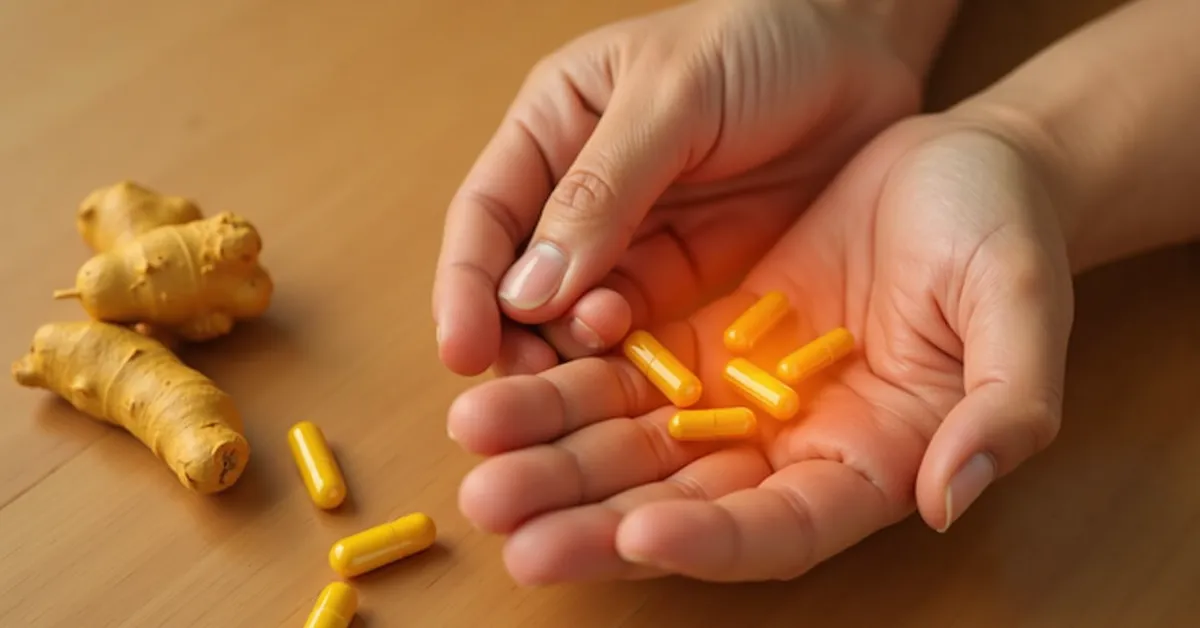
Rheumatoid arthritis (RA) is a fundamentally different disease from osteoarthritis. Where osteoarthritis is mechanical, caused by cartilage breakdown from wear and use, RA is autoimmune. The immune system attacks the synovial membrane lining the joints, producing chronic inflammation that causes pain, swelling, stiffness, and eventually joint damage. That distinction matters because it explains why curcumin, a potent anti-inflammatory compound, has received serious attention as a complementary tool for RA management. Here's what the clinical evidence shows about curcumin's effects on RA inflammation, joint symptoms, and inflammatory biomarkers.
Why Curcumin Is Relevant to Autoimmune Inflammation
RA's core pathology involves overactivation of several inflammatory pathways that curcumin is known to target. The NF-kB signaling pathway is central to this: when NF-kB is activated, it triggers production of pro-inflammatory cytokines including TNF-alpha, IL-1 beta, and IL-6, all of which are key drivers of RA joint inflammation and are the same targets of biologic medications like adalimumab and tocilizumab. Curcumin inhibits NF-kB activation. It also downregulates COX-2 (cyclooxygenase-2), the enzyme responsible for prostaglandin synthesis and inflammation, which is the same enzyme targeted by NSAIDs like ibuprofen and naproxen. Unlike NSAIDs, curcumin doesn't appear to carry the same gastrointestinal or cardiovascular risk profile at typical supplement doses.
Beyond NF-kB and COX-2, curcumin has demonstrated effects on several additional RA-relevant pathways:
- Reducing RANKL expression (which drives joint bone erosion)
- Suppressing matrix metalloproteinases that degrade cartilage
- Modulating T-cell activity in ways that may help correct the autoimmune imbalance underlying RA
Clinical Trial Evidence in RA Patients
The most frequently cited human trial in this area is a small but rigorous 2012 randomized pilot study that compared curcumin alone, diclofenac sodium (an NSAID) alone, and a combination of both in active RA patients. Participants receiving curcumin showed the highest percentage of improvement in Disease Activity Score (DAS28) and ACR20 response rates, outperforming the diclofenac group on the primary endpoint. The curcumin group also showed better tolerability (PMID: 22407780).
A 2021 systematic review of clinical trials examining curcumin in RA patients found that curcumin supplementation consistently reduced key inflammatory markers, including CRP and erythrocyte sedimentation rate (ESR), and improved pain scores across multiple trials. The review noted that most positive studies used curcumin doses of 500 mg to 1,000 mg daily with enhanced bioavailability formulations (PMID: 34331695).
A 2022 systematic review and meta-analysis of 15 randomized controlled trials covering multiple types of arthritis, including RA, found that curcumin supplementation significantly improved pain scores, functional outcomes, and inflammatory markers compared to placebo. Effects were most pronounced in studies using higher curcumin doses and longer intervention periods (PMID: 35935936).
More recently, a 2023 phase III double-blind randomized controlled trial examined whether curcumin could help RA patients maintain disease remission while tapering disease-modifying antirheumatic drugs (DMARDs). The findings added to the growing evidence that curcumin has meaningful effects on RA disease activity, though the trial also reinforced that curcumin works best as an adjunct rather than a primary treatment (PMID: 37650921).
What Curcumin Can and Cannot Do for RA
It's worth being direct about the limitations here. RA is a serious autoimmune condition that, in moderate to severe cases, requires disease-modifying treatment to prevent irreversible joint damage. Curcumin is not a substitute for DMARDs, biologics, or rheumatology care. What the evidence does support is curcumin as a meaningful adjunct: something that may reduce symptom burden, support pain management, and contribute to reducing systemic inflammatory load alongside conventional treatment. Patients in clinical trials who added curcumin to their regimens consistently reported improvements in morning stiffness, joint tenderness, swelling counts, and patient-reported pain scores. For people with mild early-stage RA, or for those in remission looking to maintain disease control with lower medication burden, curcumin appears to offer a well-tolerated option with legitimate mechanistic and clinical support.
Dosage for Rheumatoid Arthritis
Trials showing benefits in RA have generally used 500 mg to 1,000 mg of curcuminoids daily, typically standardized to 95% curcumin. Some protocols went higher, to 1,500 mg daily, particularly when looking at inflammatory biomarker reduction. Absorption is the limiting factor in all curcumin research. Raw curcumin is poorly absorbed without bioavailability enhancers. Studies using piperine (the black pepper compound found in BioPerine) show absorption increases up to 2,000% compared to unenhanced curcumin. Trials that produced the strongest clinical results in RA used enhanced formulations. Taking curcumin with a fat-containing meal also improves uptake since curcumin is fat-soluble. A twice-daily dose with breakfast and dinner, as used in several trials, is a practical protocol for most people.
Safety and Interactions
Curcumin at supplement doses (up to 1,500 mg daily) is generally well-tolerated in clinical trials. Gastrointestinal side effects (nausea, loose stools) occur occasionally and are usually dose-dependent and transient. Taking it with food reduces this risk significantly. The relevant interaction concerns for RA patients include:
- Anticoagulants (curcumin has mild blood-thinning properties, which may add to warfarin or aspirin effects)
- Immunosuppressants (theoretical interaction given curcumin's immune-modulating effects)
- Sulfasalazine (some research suggests curcumin may improve sulfasalazine's anti-inflammatory effects)
Always discuss supplement additions with your rheumatologist. The MFL health journal has more detail on the research behind curcumin and rheumatoid arthritis and turmeric for joint pain and arthritis relief if you want to dig deeper into the mechanisms.
Practical Takeaway
The research on curcumin and rheumatoid arthritis is more robust than for most supplements in this category. Multiple clinical trials and systematic reviews show consistent reductions in pain scores, morning stiffness, and inflammatory markers in RA patients taking 500 to 1,000 mg of curcuminoids daily. The key requirements are a high-quality formulation with standardized curcuminoids and a bioavailability enhancer. Me First Living's Turmeric Curcumin with Black Pepper delivers 1,000 mg curcuminoids with BioPerine at the dose used in positive clinical trials. Also available on Amazon for those who prefer that option. Work with your rheumatologist before adding curcumin to an existing treatment plan. The goal is complementary support, not replacement of disease-modifying care.