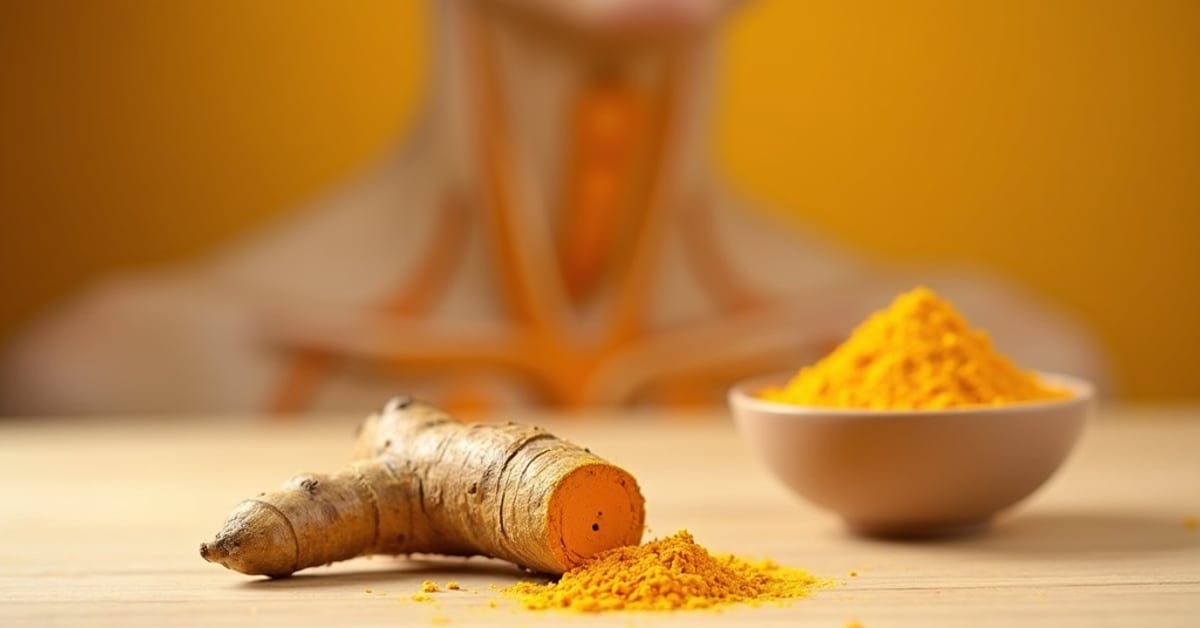
What Turmeric Actually Does In The Body
Turmeric is a spice, and its most studied component is curcumin, a group of plant compounds called curcuminoids. Curcumin is known for antioxidant and anti-inflammatory activity, meaning it may help the body manage oxidative stress and inflammatory signaling. That matters for thyroid conversations because several common thyroid conditions, including Hashimoto's thyroiditis and Graves' disease, are autoimmune and involve chronic inflammation of the thyroid gland.
Here is the honest framing: no supplement, turmeric included, replaces thyroid hormone medication or a doctor's care. What the research explores is whether curcumin's general biological effects may support people who also happen to have thyroid concerns. That is a very different claim from treating the disease itself.
Turmeric And Thyroid: What The Research Suggests
The most cited finding in this area comes from a large population study. A 2013 analysis published in Endocrine Practice examined a Pakistani population and reported that regular consumption of turmeric was associated with a lower prevalence of thyroid nodules and goiter. This was an observational association, not proof that turmeric shrinks nodules, but it is the reason turmeric keeps coming up in thyroid discussions.
Other work looks at curcumin's antioxidant role. Autoimmune thyroid disease is characterized by oxidative stress and immune activity against thyroid tissue. Laboratory and animal research, including studies summarized in reviews in journals such as Molecules, suggests curcumin can influence inflammatory pathways like NF-kB signaling. These mechanisms are biologically plausible reasons someone might expect a benefit, but mechanism studies in cells and rodents do not automatically translate to results in humans.
There is also broader human evidence on curcumin and inflammation generally. A 2012 trial in Phytotherapy Research found curcumin performed comparably to an anti-inflammatory drug in people with an inflammatory joint condition. That study was not about the thyroid, but it demonstrates curcumin can have measurable anti-inflammatory effects in living people, which is the property most relevant to inflammatory thyroid conditions.
What This Does And Does Not Mean
Taken together, the evidence points to a supporting role at best. Turmeric may help address the inflammatory and oxidative background that accompanies many thyroid conditions. It has not been shown to normalize TSH, restore thyroid hormone production, or reverse autoimmune damage in controlled human trials. Anyone promising those outcomes is going beyond what the science supports.
Turmeric For Specific Thyroid Situations
Hashimoto's And Hypothyroidism
Hashimoto's is the leading cause of an underactive thyroid in many countries, and it is driven by immune attack and inflammation. Because curcumin modulates inflammatory pathways, some people with Hashimoto's use it as part of an anti-inflammatory routine. Research directly testing curcumin in Hashimoto's patients is limited, so this use is based on mechanism and general anti-inflammatory data rather than dedicated clinical trials.
Graves' Disease And Hyperthyroidism
Graves' disease also involves autoimmune activity, this time driving an overactive thyroid. The same antioxidant and immune-related mechanisms apply in theory, but again there is no strong body of human trials showing turmeric changes thyroid function in these patients. Standard medical treatment remains essential.
Thyroid Nodules
The nodule association from the 2013 Endocrine Practice study is the strongest thyroid-specific signal, and it is still only an association. It suggests populations that eat more turmeric may have fewer nodules, not that taking turmeric shrinks an existing nodule. Any nodule should be evaluated by a physician.
Absorption: Why Formulation Matters
Curcumin is poorly absorbed on its own. Your body clears it quickly, and much of it never reaches the bloodstream. This is why supplement quality is a real issue, not marketing fluff. Two common solutions appear on labels:
- Black pepper extract: piperine, often sold as BioPerine, has been shown to increase curcumin absorption substantially in human research.
- Specialized delivery systems: phospholipid complexes and other formulations designed to improve bioavailability.
When comparing products, a quality turmeric supplement will typically use a standardized extract with a stated curcuminoid content rather than plain ground turmeric powder. Products labeled with 95% curcuminoids concentrate the active compounds far beyond what culinary turmeric provides.
Safety, Interactions, And Thyroid Medication
Turmeric used as a spice is widely considered safe. Concentrated curcumin supplements are also generally well tolerated in studies, with mild digestive upset being the most common complaint. A few points deserve real attention if you have a thyroid condition:
- Medication timing: levothyroxine and similar thyroid drugs absorb best on an empty stomach and can be affected by other substances taken at the same time. Separating your supplement from your thyroid medication by several hours is a sensible precaution to discuss with your pharmacist.
- Blood thinners: high-dose curcumin may affect clotting, so anyone on anticoagulant or antiplatelet medication should get medical clearance.
- Iron absorption: curcumin can bind iron, which may matter for people managing iron levels.
- Pregnancy and surgery: avoid supplemental doses during pregnancy without guidance, and stop before scheduled surgery.
Because thyroid disorders require monitoring through blood work, do not adjust or stop prescribed medication based on adding turmeric. Let your care team track your labs so any changes are measured, not guessed.
How To Use Turmeric If You Choose To Try It
If you and your doctor decide turmeric fits your routine, a few practical habits help:
- Choose a standardized extract with a listed curcuminoid percentage, not raw powder alone.
- Look for an absorption enhancer such as piperine or a bioavailability-focused formulation.
- Take it consistently, since curcumin's effects build over time rather than working after a single dose.
- Keep it away from your thyroid medication window.
- Recheck your thyroid labs at your normal intervals so you and your doctor can see whether anything shifts.
Set realistic expectations. Turmeric is best viewed as one part of an overall anti-inflammatory lifestyle that includes diet, sleep, and stress management, working alongside proper medical treatment rather than in place of it.
The Bottom Line On Turmeric And Thyroid
Curcumin has real antioxidant and anti-inflammatory properties, and turmeric intake has been associated with fewer thyroid nodules in at least one large observational study. Those are reasonable grounds for interest, especially given how much inflammation drives autoimmune thyroid conditions. The evidence stops short of showing turmeric treats, cures, or reverses any thyroid disease. Use it as supportive, discuss it with your doctor, keep taking prescribed medication, and let your lab results tell the real story.